
Oysters, Sharks & Weather Balloons: How CES Students Spent Summer Vacation
August 13, 2025
For undergraduates in Coastal Environmental Science, summer break gives an opportunity to delve deeper into arenas they learn about during the academic year, whether by heading out for some field research or exploring a career path through an internship.
Here are a few selected highlights from CES students' summer!
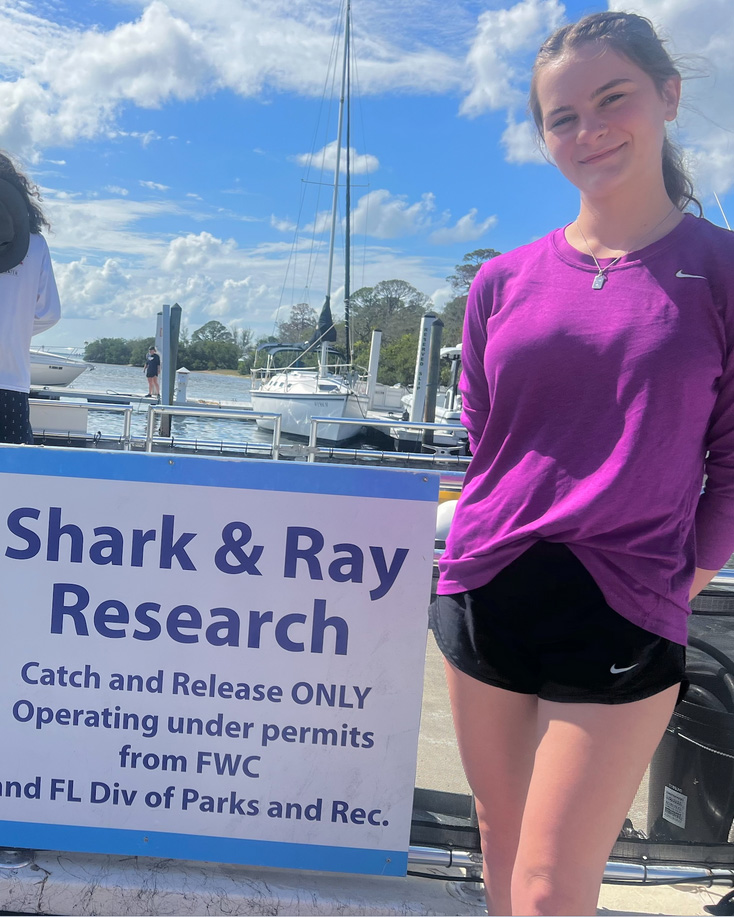 A summer with sharks
CES student Victoria Barksdale took a week-long research trip at Coastal Marine Education and Research Academy in Florida. While there, she caught, measured, tagged and safely released shark and ray species in order to help in efforts to monitor species population and migration.
What she learned: “As a first-gen college student passionate about marine conservation, this program felt like the perfect next step. The biggest thing I took away was how powerful fieldwork truly is. Working directly with these species deepened my connection to the ocean and solidified my commitment to protecting it. This experience also confirmed that I’m heading in the right direction, as I plan to study sharks and rays (elasmobranchs) in graduate school!”
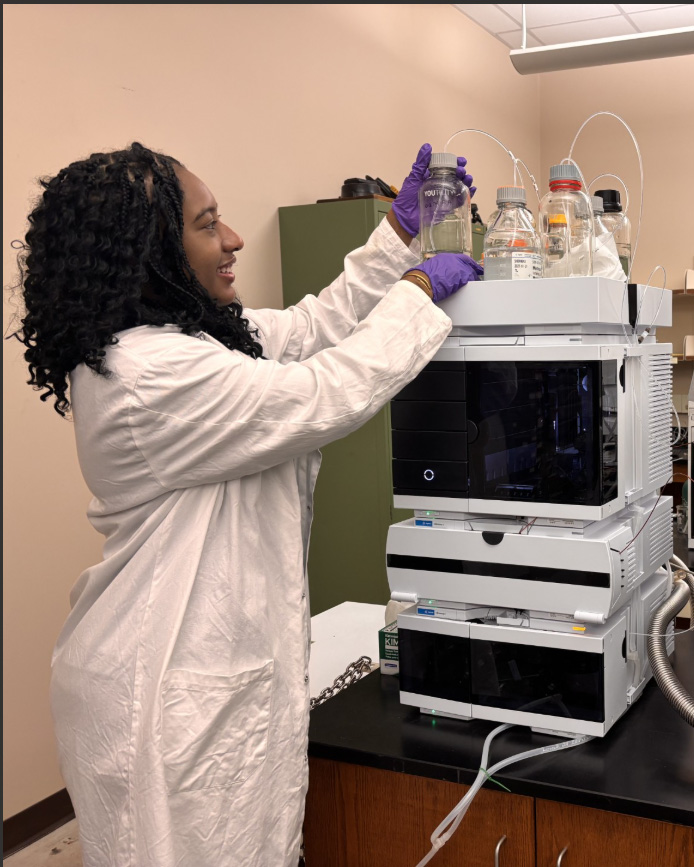 Wastewater-based epidemiology: "It's an amazing tool to have"
CES student Alexia Cole is an LSU Gulf Scholar working with Bikram Subedi, an assistant professor in Environmental Sciences, on her project: "Estimation of Substance Use in Louisiana Communities"
Her research: "For my summer research project, I chose to explore wastewater-based epidemiology to monitor trends in illegal drugs, including synthetic opioids and psychostimulants, in vulnerable communities across Louisiana. As overdose deaths reach historic highs and new substances like protonitazene and xylazine emerge rapidly, early and real-time detection methods are more crucial than ever. I am deeply committed to contributing to public health initiatives focused on prevention, harm reduction, and saving lives."
What the impact is: "This project provides me with valuable insights into the nearly real-time prevalence of substance use within our communities. By monitoring drug use patterns during mass gatherings and in high-risk areas, I hope to support the development of targeted strategies to reduce overdoses. I am also eager to gain hands-on experience with state-of-the-art analytical instruments such as LC-MS/MS, working toward innovative methods to track and understand substance use more effectively."
What she's learned so far: "Wastewater-based epidemiology is an innovative approach to provide early, real-time insights into community drug use trends. Through my project, I’ve learned that monitoring wastewater allows us to detect emerging threats like opioids and newer drugs before they lead to widespread harm. This proactive approach helps public health officials respond faster, allocate resources better, and potentially save lives. It's an amazing tool to have to fight the drug crisis here in Louisiana.
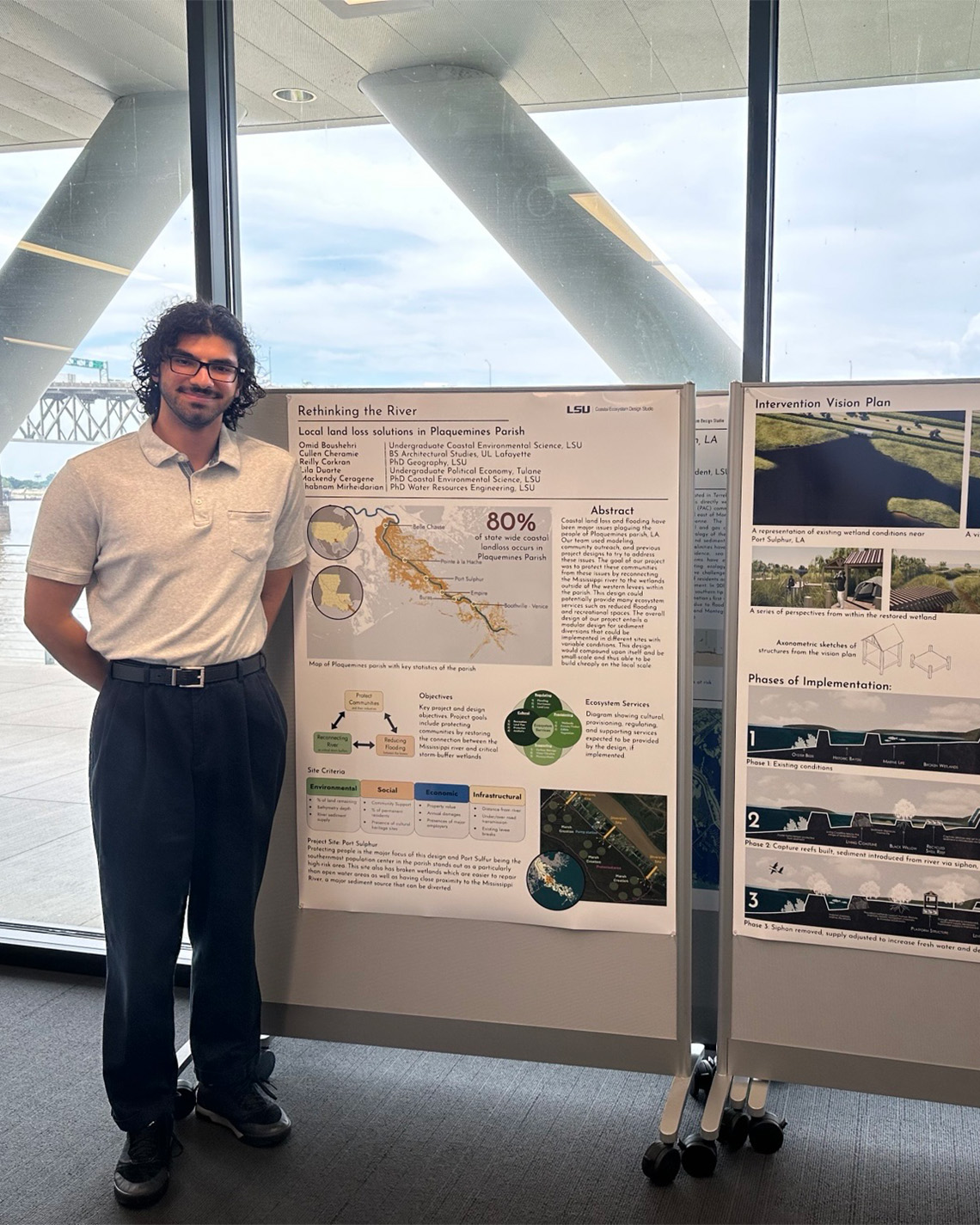 An internship at the Coastal Ecosystem Design Studio
CES student Omid Boushehri worked at LSU's Coastal Ecosystem Design Studio at the Water Campus.
What he did: "My activities varied week to week as my group spent our 8 weeks designing a coastal protection/restoration project for Plaquemines Parish. Every week we focused on different parts of the design, starting with things like analyzing strengths and weaknesses of the area as well as the general landscape, and ending with a fully realized design solution with visual models and supporting literature. My personal week-to-week would be things like meeting with my group, advisors, or people within the field to further develop the plan, researching past projects, designing presentations, and things like that."
What he learned: "The biggest thing I learned was the importance of interdisciplinary input when it comes to real world design as someone's area of study has such a massive impact on their worldview that sometimes you need someone from a totally different background to point out flaws or ways you could improve upon said design."
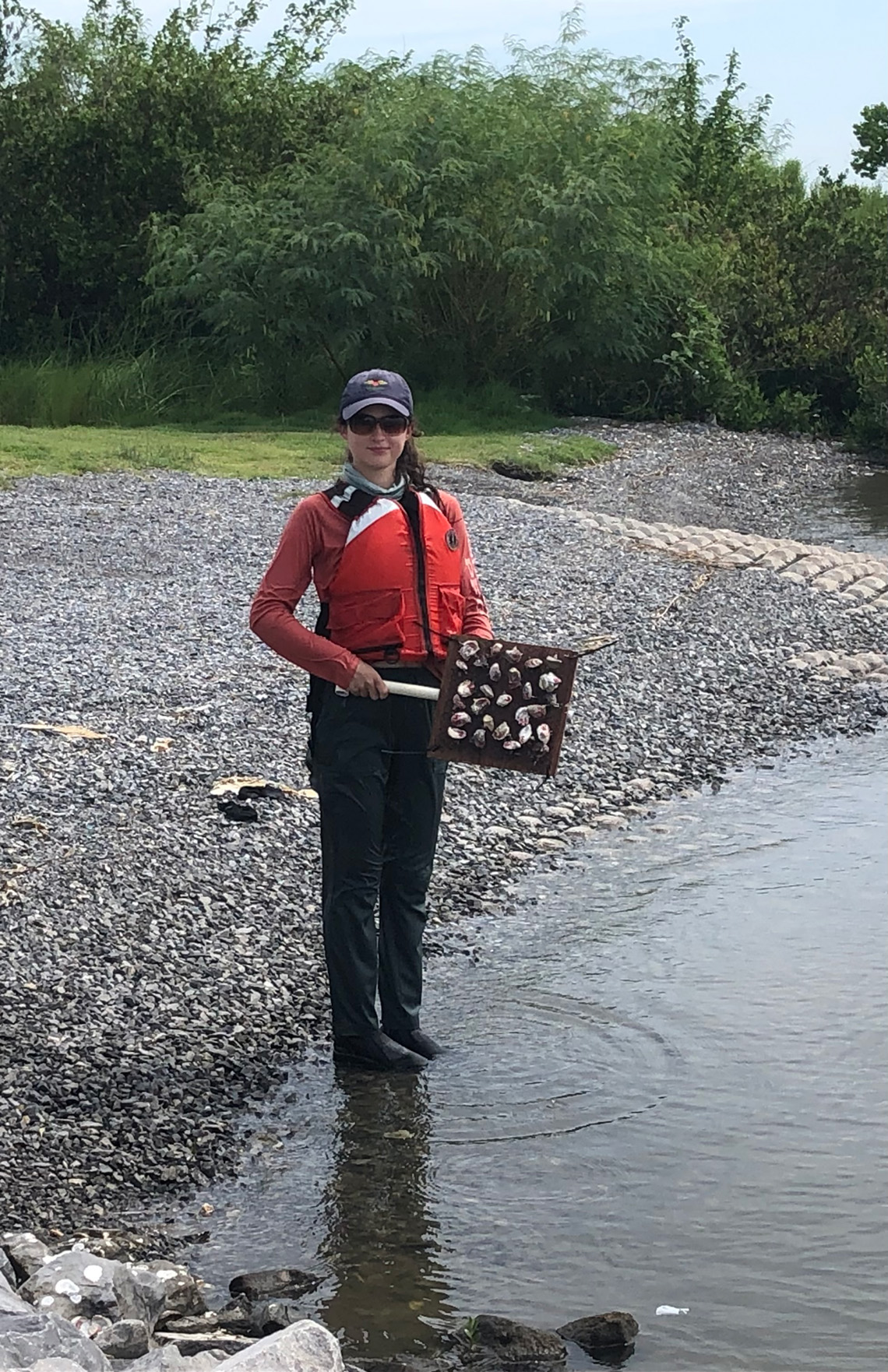 Using sonar to better understand a Louisiana icon: the oyster
CES student Katherine Patron, a Summer 2025 Gulf Scholar, spent her summer exploring how sonar technology can be used in innovative ways to study oysters.
Her research: "Since oysters live in brackish, turbid waters, they’re difficult to observe in the wild. Developing a reliable method to count and measure oysters over time would be incredibly valuable for population monitoring, restoration efforts, and future research, as well as supporting the oyster industry. As someone from Plaquemines Parish, I’m passionate about understanding oysters – an important part of my culture – and hope to contribute to advancing the science around these bivalves and the technology used to study them!"
How it relates to CES: "During my freshman year, I worked in the Seascape Ecology Lab using large-area imaging and histology to study coral diseases. Like corals, oysters depend on calcium carbonate to build their shells, but ocean acidification reduces carbonate ion availability. Both aquatic creatures are vulnerable to climate change, and this research deepens my understanding of how to sustain and learn more about them."
What she's learned: "I’ve learned that the ARIS Explorer 3000 sonar is an advanced and novel tool for monitoring Louisiana’s oyster reef populations. I’ve also gained more knowledge of the various oyster reef structures along our coast that support oyster growth and help protect our shoreline from wave energy and extreme weather. Through my field work and excursions with Gulf Scholars I understand more about Louisiana’s Gulf Region and how its ecosystems, industries, and communities are all interconnected."
An internship at the National Weather Service
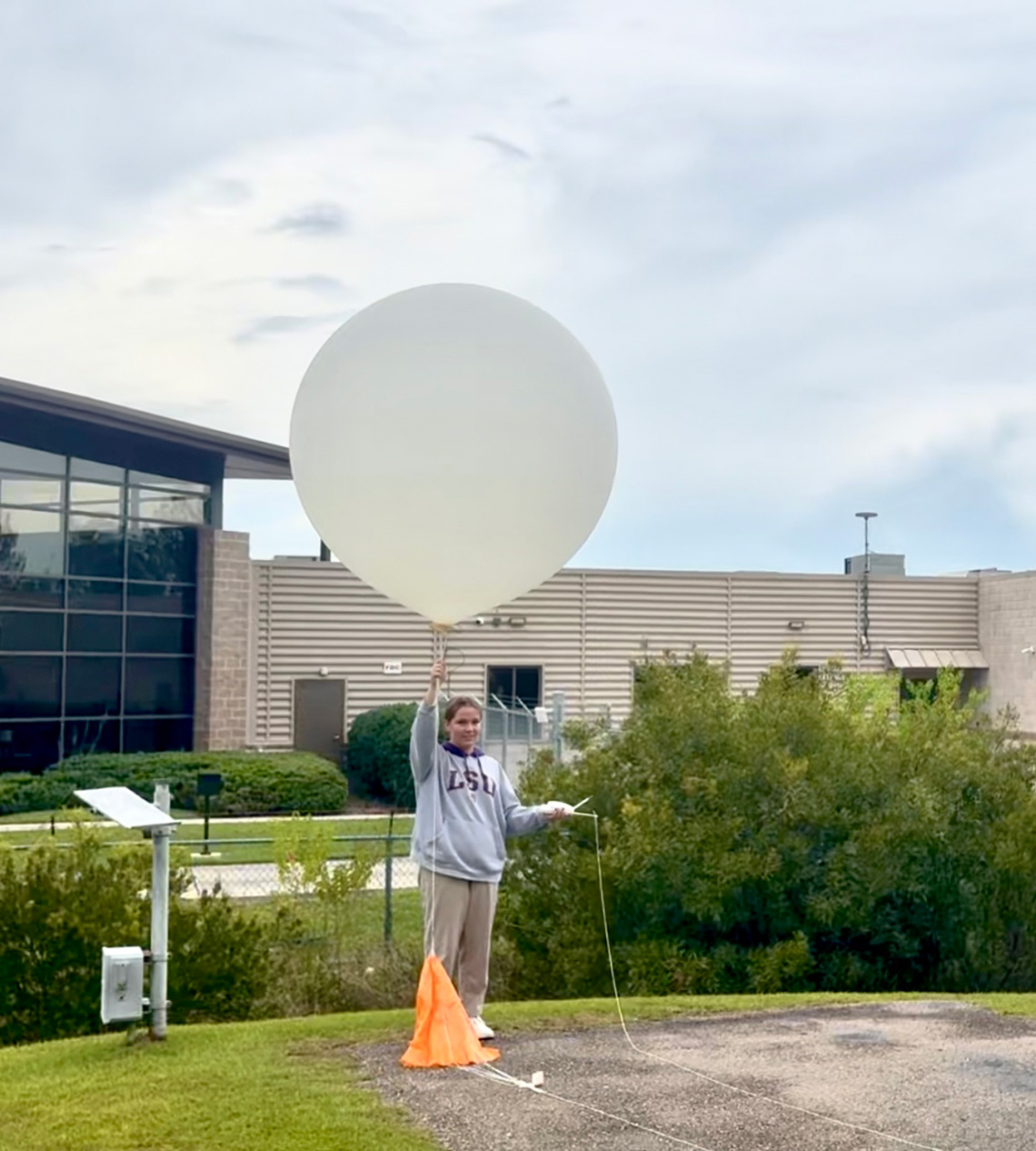
CES student Emma Ryan spent her summer interning at the National Weather Service Office for New Orleans/Baton Rouge.
What she did: "I shadowed forecasters as they carried out their daily responsibilities, including producing forecasts, issuing warnings during active weather, writing Area Forecast Discussions (AFDs), and managing social media communications. Over the summer, I also assisted with launching weather balloons and contributed to data entry for one of their ongoing research projects."
What she learned: "One of the most important things I’ve learned while working with the National Weather Service is how many moving parts are involved in ensuring that both partners and the public receive timely, accurate, and easy-to-understand information. From issuing forecasts and severe weather warnings to keeping social media updated and accessible, every aspect plays a role in helping people prepare for a wide range of weather hazards."
- For information about student research opportunities at the College of the Coast & Environment, visit our Undergraduate Research page
- For information about internships, visit our Internships page
- For information about the Gulf Scholars program at LSU, visit their information page