
Alumna Spotlight: CES Graduate Explores Connections Between People, Places and Policy
October 06, 2025
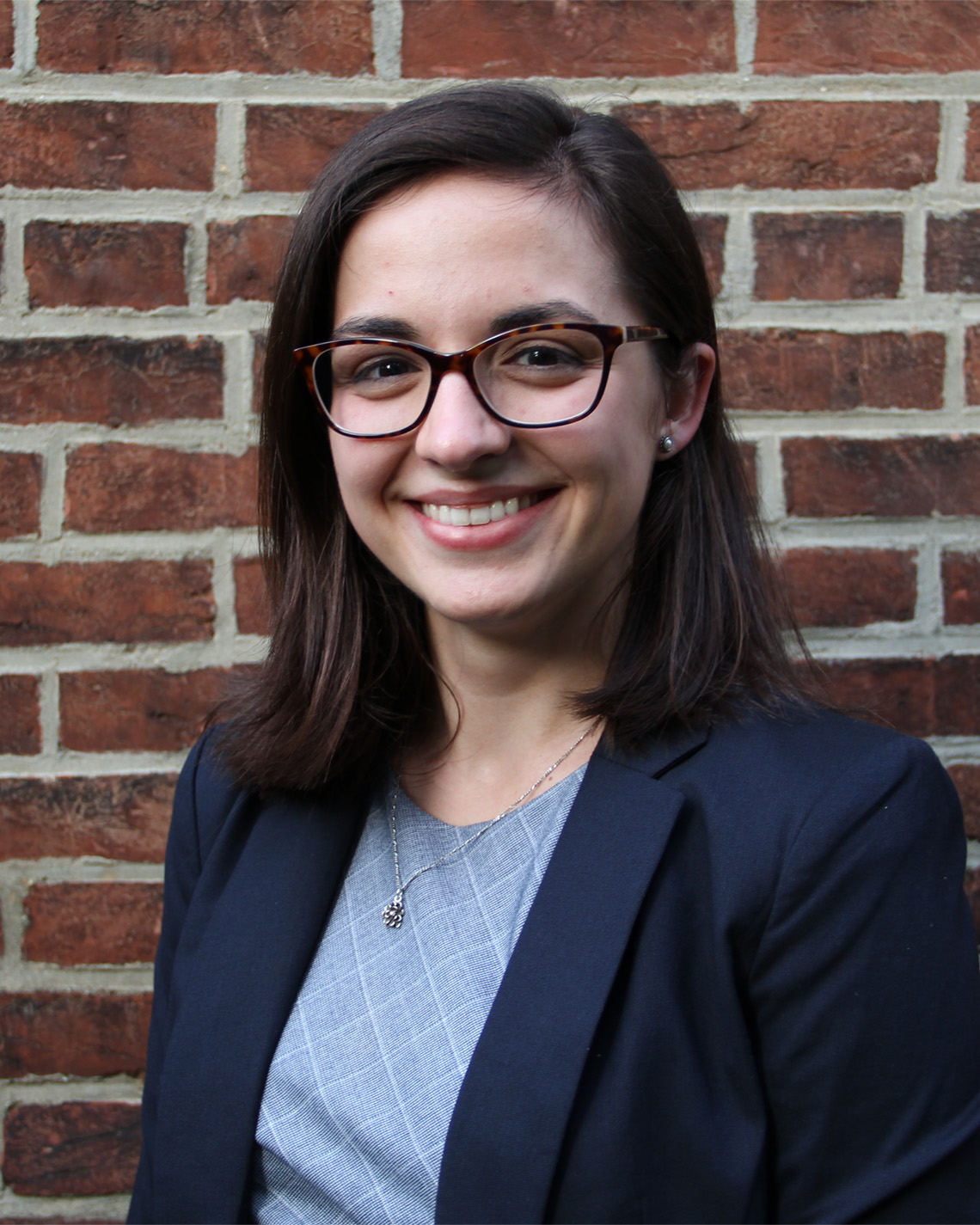
Louisiana native and CC&E alumna Abbey Hotard returns to deliver this week's Coast & Environment lecture.
"I ask questions to explore the complex relationships between people, the places in which they live and work, and the policies shaping development and adaptation along the Gulf Coast," says Dr. Abbey Hotard of her research.
A CES alumna and Louisiana native, Hotard is returning to her roots this Friday when she delivers this week's Coast & Environment Seminar on Friday at 11:30 a.m. in the Dalton J Woods Auditorium.
After receiving her BS from LSU in 2017, Hotard went on to Texas A&M University, where she got her PhD in Marine and Coastal Management and Science. Today, she is an assistant professor at the Stokes School of Marine & Environmental Sciences at the University of South Alabama, researching environmental policies and their impacts on coastal communities.
CC&E caught up with Hotard to learn more about her research, and how her time at CC&E shaped her experience. This conversation has been lightly edited.
What part of Louisiana did you grow up in? Did that impact your career choice or your research?
I grew up in the suburbs of New Orleans, LA. I didn't realize it until later in my academic journey, but my experience growing up in a place still recovering from Hurricane Katrina absolutely shaped (and continues to shape) my perspective and approach to studying coastal communities.
Despite growing up so close to the coastline, the first time I actually saw a salt marsh was during one of my freshman classes at LSU. That class was part of the Louisiana Service and Leadership program which highlighted some of the social and environmental challenges present across Louisiana. This program inspired me to change my major from Chemical Engineering to Coastal Environmental Sciences with a minor in Political Science to better understand the dynamic relationship between coastal ecosystems and the communities that have lived in this region for generations.
My desire to enable future generations to enjoy our coastal resources and ways of life is what shapes my research as a scientist.
You’re a social scientist now, but when you were in CES you worked in a research lab with Dr. Giulio Mariotti. Do you feel your undergraduate research experience influenced your current work?
One of the things I enjoyed most about the College of the Coast & Environment is that nearly all students were encouraged to seek research experience with one of the faculty members as early as possible.
Dr. Mariotti's lab interested me by coupling physical, biological, and geological processes to better understand coastal processes. Working in the lab helped me practice basic research skills that apply across all academic disciplines. More importantly, however, I saw the value of understanding complex, inter-related processes within a larger system.
I see my shift towards social science to understand human behavior and policy decisions in coastal communities is just a shift towards different, but still interrelated processes of the larger coastal system.
Any advice for current CES majors on choosing a career path?
My first advice is to seek out research experience as soon as possible. Even if the topic is not exactly what you had in mind at first, getting experience with the scientific process in general is extremely valuable. I'd also recommend CES majors to seek out internships.
There are so many amazing coastal and environmental organizations in the surrounding area that could shed light on different career paths. I had an internship at The Water Institute of the Gulf during my junior year. During that internship, I learned how to use GIS and was able to see how science interfaces with policy and decision making.
This internship inspired me to seek out a certificate in GIS during grad school and to apply for the NASEM Gulf Research Program Science Policy Fellowship a few years later. It's hard to overstate how much impact one semester can have on your career trajectory.
Your research covers societal attitudes towards policies like home-buyouts and relocation. What’s an important thing for people on the Gulf Coast to know about these policies?
My research aims to demystify the reasons why coastal residents live, and often remain, in areas prone to natural hazards, like flooding. I ask questions to explore the complex relationships between people, the places in which they live and work, and the policies shaping development and adaptation along the Gulf Coast.
I draw upon my cross-disciplinary training in environmental science, urban planning, sociology, and political science to shed light on the perceived dissonance between existential climate change predictions and adaptation decisions (i.e., actions or lack thereof) made at the household and community level.
I then translate these findings into potential policy innovations that can better meet the adaptation needs and preferences of individual households and their broader coastal communities.... It's important for people to understand that challenges are complex and personal for coastal residents and their local governments.
There is no one easy solution to replicate across the region. However, understanding the patterns of decision making might help us be more efficient with limited time and resources.
What do you hope researchers and policy – makers take away from your research?
My hope is that researchers and policy makers see the importance of shaping policy to meet the needs and desires of coastal residents.