Threads of Ingenuity: Linen - How it’s Made and its Origins
As an extension of the museum’s current exhibit, “Threads of Ingenuity: Textiles, Techniques and Traditions of the Past,” I wanted to highlight a natural textile. As Louisianans, we probably know a lot about cotton, and wool is generally too warm for our climate. So, this article is all about linen.
Linen is made from the bast fibers of the flax plant. Natural bast fibers are strong fibers obtained from the phloem, or outer bark, of jute, hemp or flax plants. These three plants are annual renewable crops that can be harvested in about 100 days. Bast fibers become stronger when wet and dry faster than either cotton or wool. Since bast fibers are stronger when wet, ropes and sails were made from this type of fiber before the creation modern synthetic fibers.
Turning bast fibers into a linen cloth is a extensive process. The fibers first need to be separated from their woody stems. The flax plant can be harvested either before or after the seed pods are ready. Waiting for the seed pods to develop allows farmers to collect the seeds for next season’s planting, this process is called threshing. However, the fibers are worth more and are of better quality before the seeds pods develop because the nutrients are still in the plant. Farmers who go through the threshing process must also allow the plant to dry for several weeks before it can be threshed.
After the flax is harvested, it then goes through the retting process. During retting, the woody outer stems of the flax plant are softened by being soaked in water. The softened stems allow the plant's fiber to be removed from the inside of the plant’s stalk. After the fibers dry, they are passed through a flax breaker, called a boon, to loosen the strands from the inner core. Lastly, the flax is drawn through a set of spikes called a hackle. Continued hackling separates the longer strands from the shorter strands. The short strands are called tow. Tow makes coarse cloth, which is used to make items like sacks. The longer fibers are smooth and soft, and are gathered into bundles called stricks, which are then stored until the strick is needed to be spun into linen.
Linen is one of the oldest fabrics. Flax was one the first crops cultivated in the Fertile Crescent as far back as 7000 BC. The Babylonians are credited with starting the linen trade, but the most famous users of linen in the ancient world were the Egyptians. In ancient Egypt, linen symbolized light, purity and wealth. It was, therefore, used for mummification and burial shrouds. Linen was also used as currency. In ancient Mesopotamia, linen was expensive and reserved for the elite classes because the flax threads could easily break, which made it tricky to weave into linen cloth.
Linen has remained popular in the western world for centuries. In Europe and America, it was generally used for sleepwear and underclothes for all classes in all climates for all seasons. In medieval Europe, the term linens became a common reference for all household textiles such as bedding, tablecloths and towels. The term is still used today, even though linens are now made from a variety of fabrics.
In the American colonies, linen production was common on family farms. A family could easily plant a field of flax and then harvest, process, spin and weave it themselves. As the Revolutionary War approached, American colonists valued self-reliance more and more. The British textile industry was the leading textile industry in Europe at the time, so boycotting British goods and creating homespun textiles became a way for Americans to demonstrate their sovereignty. Groups like the Daughters of Liberty would hold spinning bees in town squares to not only display their skill but also their independence.
Homespun linen production continued through to the early 1800s. It started to decline as textile production became more industrialized. The invention of the cotton gin, in 1793, made cotton production more efficient. Soon other technological advances in cotton production followed, which made cotton the go-to inexpensive fabric. Linen production declined, but it did not disappear. By the mid-1800s, small farms in America no longer needed to grow and process their own flax because commercial textiles were so readily available. Home textile production saw a small revival during the Civil War but died down again when textile mills went back to producing and supply routes reopened in the South.
By the late 19th early 20th century, linen production became more specialized and focused on fine linen for tablecloths, draperies, napkins and stylish clothes. It became fashionable for upper-class men to have a light colored linen suit for warm weather. Also, women’s fashion created linen suits, dresses and riding habits. Today, clothes made of linen or linen blends are prevalent in retail stores across the country. The technological improvements in linen production in the last century has made linen more affordable and available as a standard as well as a luxury fabric.
Article by: Carrie Couvillon
Sources:
A History of Linen and How it is Made
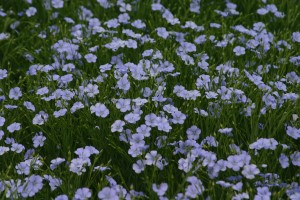 Flax
Flax
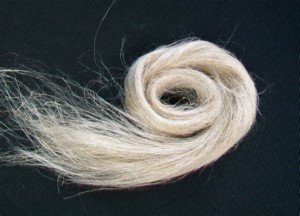 Flax Fiber
Picture by, feltingandfiberstudio.com
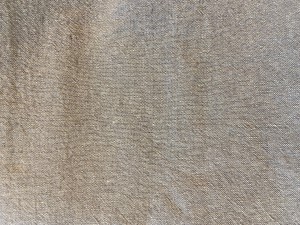 Linen Fabric