
Vince Wilson, 2026 C-I Teaching & Service Excellence Award recipient
April 20, 2026
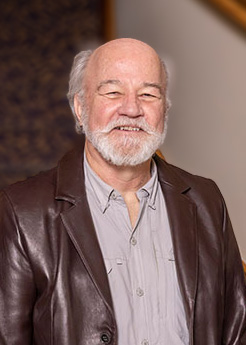
– Credit: College of Coast & Environment
For Dr. Vince Wilson, teaching environmental science has always meant teaching students how to think out loud. A Professor in the Department of Environmental Sciences at LSU's College of the Coast & Environment, Vince has spent more than three decades helping students find their scientific voice—in the classroom, in front of their peers, and eventually, in the careers that follow.
That conviction runs deep. As a self-described timid student, Vince knows firsthand what it costs to stay silent, and what it means to finally speak up. It's a lesson he has carried into every course he teaches, and into the C-I program he has shaped over more than a decade.
Showing Students the Stakes
Vince's approach to communication is grounded in a simple but powerful argument: in science, an idea you can't communicate is an idea that doesn't travel. For students in environmental science—a field that asks people to understand and respond to complex, often urgent problems—the ability to speak clearly to varied audiences isn't an add-on. It's the job.
He put that philosophy into practice in 2010 when he developed Honors Introduction to Environmental Science (ENVS 1127), which has been a C-I certified course for 11 years. In the course, students don't just study environmental problems—they research one, write about it, and present it to the class in a formal oral PowerPoint presentation. For many, it's their first time doing any of those things at the college level.
The same communication-intensive model was carried into Honors Environmental & Anthropogenic Impacts of Microbes (ENVS 2127), which Vince developed and launched in Spring 2024 and which is now also C-I certified in written and spoken communication.
Both courses reflect a principle Vince articulates clearly: communication isn't something students do at the end of learning. It's part of how they learn. "It is critical that students understand communication is not like an archer shooting an arrow at a target," he writes. "Effective communication takes several drafts and engaging with other perspectives before delivering the most effective communication for all."
Real Audiences, Real Stakes
One of the more distinctive elements of Vince's C-I teaching is a Wikipedia editing assignment, developed with support from LSU CxC staff, that asks students to publish their work publicly. The assignment reframes communication as something with genuine reach. Students aren't writing for a grade—they're writing for anyone who searches the topic. "Their communication is not just a 'class' exercise," Vince explains, "but indeed something that the world will see."
That sense of audience extends to the Coastal Environmental Science Capstone course (ENVS/OCS 4999), which Vince developed in 2012 during his tenure as Director of the Coastal Environmental Science degree program. The course asks small groups of students to prepare written, oral, and visual communication on their research topics together—not individually—so they have to negotiate meaning, not just deliver it.
A Department Shaped by His Presence
Department Chair Kevin Armbrust, who has co-taught ENVS 1127 and ENVS 2127 with Vince over the past five years, describes a teacher who adapts in real time. "I have observed his ability to adapt his teaching methods 'on-the-fly' to fit the student needs and to the particular audience," Armbrust writes. "This is an extremely important trait in student pedagogy."
Students echo that assessment—and they remember it long after graduation. Callie Snow, an Assistant Lead Aquatic Technician at Sequoia and Kings Canyon National Parks and a former Distinguished Communicator candidate Vince advised, credits him with shaping her confidence as a scientific communicator and as a professional. "Working alongside him, Vince pushed me to grow into roles and responsibilities I might not otherwise have pursued."
Morgan Taylor, LSU Class of 2014 and now a Contracting Officer at NSWC Crane, puts it directly: "The trajectory of my academic and professional life is a direct reflection of his enduring impact."
Thirty-Two Years, and Counting
Vince has advised four Distinguished Communicator candidates, reviewed portfolios for three more, and guided the Coastal Environmental Science program to more than 200 enrolled majors and 306 graduates during his tenure as director. He has received the LSU Foundation Distinguished Faculty Teaching Award (2023), the Joseph Lipsey, Jr. & Richard A. Lipsey Excellence in Teaching Award (2020), and two LSU Tiger Athletic Foundation Undergraduate Teaching Awards (2016, 2018), among others.
What drives it all, he says, is watching something change in students who start out reluctant to speak. "It has been an absolute joy to watch more timid students advance their ability to effectively speak to an audience of their peers."
About the C-I Teaching & Service Excellence Award
The C-I Teaching & Service Excellence Award (formerly the Outstanding CxC Faculty Award) recognizes an individual who, through teaching, research, faculty teaching development, or CxC program efforts, engages and champions C-I pedagogy across campus in an exemplary manner. Any LSU faculty member—tenured, tenure-track, or non-tenure track, full or part-time—actively engaged in the CxC program and C-I teaching and learning, and who has not previously received this award, is eligible. Recipients receive a $1,500 award.