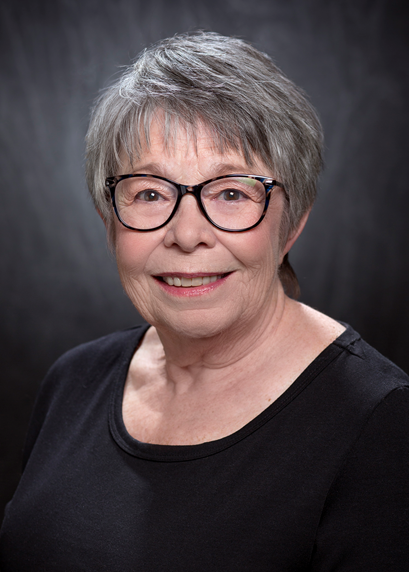
About Me
Academic Degrees
B.G.S. University of Kansas, Speech Pathology 1983
M.A. University of Kansas, Speech-Language Pathology, 1985
Ph.D. University of Florida, Rehabilitation Science, 2005
Interests
Dr. Donovan joined COMD in 2007. She is a Professor and Director of the Communication Outcomes Research (COR) Laboratory. She is also Graduate Program Coordinator for COMD. Her research interests include developing treatments and treatment outcome measures for adults with acquired neurologic communication disorders, such as those with traumatic brain injury, stroke, dementia, and Parkinson’s disease; and translating evidence-based treatments into treatments clinicians can use in their day-to-day practice.
Dr. Donovan serves on several national committees including:
- Treasurer and Executive Board member for the Academy of Neurologic Communication Disorders and Sciences ( ANCDS )
- Committee member for the American Heart Association (AHA) Stroke Recovery, Rehabilitation and Prevention Committee
- Advisor to the AHA Stroke Council Office of Federal Advocacy Advisory Group on the Delivery of Post-acute Stroke Care
- American Speech-Language-Hearing Program Committee for Acquired Language Disorders
Courses
COMD 7282 Acquired Cognitive-Communicative Disorders – Traumatic Brain Injury and Right Hemisphere Disorders
COMD 7281 Acquired Neurologic Language Disorders – Aphasia & Dementia
COMD 7780 Seminar: Exploring the Effects of Normal Aging Processes on Communication and Communication Disorders: Prevention to Intervention
COMD 7780 Seminar: Exploring Cognitive-Communication Deficits in TBI Survivors from a Life Course Perspective
COMD 4752 Survey in Adult Neurogenic Communication Disorders
COMD 3057 Research Methods in COMD
Selected Funded Research
- Department of Transportation – LSU College of Engineering – Gulf Coast Center for
Evacuation and Traffic Resiliency – P.I. $53,000
Road sign recognition during computer testing versus driving simulator performance for stroke and stroke+aphasia groups - LSU 2014 College of Humanities and Social Sciences Research Support – P.I. $10,000
Attention training in a person with Parkinson’s disease: A pilot study - NIH National Institute for Deafness and Communication Disorders LRP– P.I. $57,000
Refining the Communicative Effectiveness Survey for Individuals with Parkinson’s disease and Dysarthria - Louisiana Board of Regents Research Competitiveness Support – P.I. $85,000
Using Qualitative and Quantitative Methodologies to Adapt the Communicative
Effectiveness Survey for Elderly Louisianians - GlaxoSmithKline Inc. – P.I. Craig A. Velozo; Investigator
Developing a Computer Adaptive Test for Functional Cognition in Stroke
Dissertation Directed
- Mazumdar, Barnali (2021). Identifying A Culturally Appropriate Stimulus for the Bangla Picture Description Task.
- Nakkawita, Surani (2020). Comparison of High-Tech Augmentative and Alternative Communication Interfaces: Do Age and Technology Experience Matter?
- Varnado, Chantelle (2015). Treatment efficacy of manual therapy on speech outcomes in children with spastic cerebral palsy: A single-subject experimental design.
- Savage, Meghan (2012). Comparing the Treatment Effect ff Conversational and Traditional Aphasia Treatments Based on Conversational Outcome Measures.
- Stead, Amanda (2011). Time of Day Effects on Language Discourse in Healthy Aging and Dementia.
Master's Thesis Directed
- Taylor Glorioso (2017). The Effects of Photographic Representations on Scores of the Stroke and Aphasia Quality of Life Scale-39 for People with Aphasia
- Mora Mahoney, (2016). Treating Attention Deficits in People with Parkinson’s Disease.
- Brown, Caitlin (2015). Do people with aphasia interpret road signs differently than people without aphasia?
- Studrawa, Samantha (2015). Investigating the effects of photographic representations on scores of the Stroke and Aphasia Quality of Life Scale- 39 for people with moderate to severe aphasia.
- Heise-Jensen, Lea (2014). Stroke and Quality of Life Scale- 39: People with aphasia rate pictures similar to questions.
- Ferguson, Michelle (2013). Treatment Effects of Attention Process Training for an Individual with Idiopathic Parkinson’s Disease.
- Brower, Ashley (2013). Finding Similarities Between Photographs and the Stroke and Aphasia Quality of Life Scale – 39 (SAQOL-39) Items.
- Copperberg, Kelsey (2013). Comparing the Treatment Effect of Conversational and Traditional Aphasia Treatments on Linguistic Complexity Measures.
- Ferguson, Kristen (2013). Treatment Effects of Attention Process Training for an Individual with Parkinson’s Disease.
- Boudreaux, Danielle (2011). Using the Ambulatory Phonation Monitor to Measure the Vocal Parameters of Older People with and without Parkinson’s disease.
- Deroche, Dara (2011). A Survey of Selected Picture Representations of the Stroke and Aphasia Quality of Life Scale-39 Items.
- Guillory, Erin (2011). Treatment Effect of Attention Process Training for an individual with Idiopathic Parkinson’s Disease: a case study.
- Michiels, Heidi (2010). Treatment Effect of Maximum Performance Speech Therapy for Individuals with Parkinson’s Disease and Dysarthria.
- Zimmerman, Claire, (2009). Effect of Group Aphasia Treatment on Word Retrieval Skills
Undergraduate Honors Theses Directed
- Dupré, Bonnie (2017). Music and Memory: Effects on Language Quantity and Agitation in People with Dementia
- Pinas, Catherine (2017). Can Individualized Music Reduce Agitation and Make Communication More Meaningful for Dementia Center Clients?
Selected Peer-Reviewed Publications
See full CV for complete list.
(*mentored students)
- *Mazumdar, B. & Donovan, N.J. (2020) Maintaining Research Fidelity: Remote Training and Monitoring of Clinical Assistants in Aphasia Research. Annals of Indian Academy of Neurology, 3(8), 130-134.
- *Mazumdar, B., Donovan, N. J., & Sultana, A. (2020) Comparing high-context color photograph over line drawings in a picture description task – Preliminary study. International Journal of Language and Communication Disorders, 55(5), 793-805.
- Duncan, E. Susan, Donovan, N.J., Sajjadi, S.A. (2019). Clinical assessment of characteristics of apraxia of speech in primary progressive aphasia. American Journal of Speech-Language Pathology, 29(1S), 485-497.
- Donovan, N. J. (2018). Examining the item-level psychometric properties of the Communicative Effectiveness Survey-Revised for people with Parkinson’s disease and dysarthria. Clinical Archives in Communication Disorders, 3(1): 42-51.
- *Mazumdar, B., Donovan, N.J., Narang, V. (2018). Sociolinguistic adaptation process of the Bangla Western Aphasia Battery-Revised. Journal of the Indian Speech Language Hearing Association, 32, 23-33
- Donovan, N. J. (2017). People with Parkinson’s disease and dysarthria benefit equally from Lee Silverman Voice Treatment (LSVT LOUD) delivered via tele-rehabilitation compared with conventional face-to-face (FTF) version of the treatment. Evidence-Based Communication Assessment and Intervention, 11(3-4), 124-129. DOI: 10.1080/17489539.2017.1339764
- Savage, M. C., Donovan, N. J. (2017). Comparing linguistic complexity and efficiency in conversations from stimulation and conversation therapy in aphasia. International Journal of Language & Communication Disorders, 52(1), 21-29.
- Barker, B. A., Donovan, N. J., *Schubert, A. D., Walker, E. A. (2016). Using Rasch analysis to examine the item-level psychometrics of the Infant-Toddler Meaningful Auditory Integration Scales. Speech, Language and Hearing, 1–14.
- Donovan, N.J., *Boudreaux, D., *Savage, M.C. (2015). Objective measurement of vocal parameters in older people with and without Parkinson’s disease in their natural environments – a pilot study. Current Concepts in Communication Disorders, 42, 100-109.
- *Savage, M.C., Donovan, N.J., Hoffman, P. (2014). Preliminary results from conversation therapy in two cases of Aphasia. Aphasiology, 28(5), 616-636.
- Edmonds, L.A. & Donovan, N.J. (2013). Research applications for An Object and Action Naming Battery to assess naming skills in Spanish/English bilingual speakers. Behavior Research Methods, DOI 10.3758/s13428-013-0381-7.
- Donovan, N.J., Daniels, S.K., Edmiaston, J., Weinhardt, J., Summers, D., Mitchell, P.H. On behalf of the American Heart Association Council on Cardiovascular Nursing and Stroke Council. (2013). Dysphagia Screening: State of the art nursing symposium, International Stroke Conference 2012. Stroke, 44, e24-e31.
- Donovan, N.J. (2012). Patient-Reported Outcomes for Acquired Dysarthria. American Speech Language Hearing Association Perspectives on Neurophysiology and Neurogenic Speech and Language Disorders, 22(4), 152-159.
- Edmonds, L.A., & Donovan, N.J. (2012). Item level psychometrics and predictors of performance for Spanish/English bilingual speakers on An Object and Action Naming Battery. Journal of Speech, Language, and Hearing Research, 55, 359-381.
- Baylor, C., Hula, W., Donovan, N.J., Kendall, D.L., Doyle, P.J., Yorkston, K.M. (2011). An introduction to item response theory for speech-language pathologists [Tutorial]. American Journal of Speech Language Pathology, 20, 243-259.
- Donovan, N.J., Heaton, S.C., Kimberg, C., Velozo, C.A. (2011). Conceptualizing functional cognitive domains for the computer adaptive measure of functional cognition for traumatic brain injury. Brain Injury, 25(4), 348-364.
- Hula, W., Donovan, N.J., Kendall, D.L., Rothi, L.J.G. (2010). Item response theory analysis of the Western Aphasia Battery. Aphasiology, 24(1), 1326-1341.
- Donovan, N.J., Kendall, D.K., Young, M.E., & Rosenbek, J.C. (2008). The Communicative Effectiveness Survey: Preliminary evidence of construct validity. American Journal of Speech-Language Pathology, 17(4), 335-347.
- Donovan, N.J., Kendall, D.L., Heaton, S.D., Kwon, S., Velozo, C.A., & Duncan, P.W. (2008). Conceptualizing functional cognition in stroke. Neurorehabilitation and Neural Repair, 22(2), 122-35.
- Donovan, N.J., Velozo, C.A., & Rosenbek, J.C. (2007). The Communicative Effectiveness Survey: Investigating its item-level psychometrics. Journal of Medical Speech Pathology, 15(4), 433-447.
- Donovan, N.J., Rosenbek, J.C., Ketterson, T.U., & Velozo, C.A. (2006). Adding meaning to measurement: Initial Rasch analysis of the ASHA FACS Social Communication Subtest. Aphasiology, 20(2, 3, 4), 362-37.
Book Chapters
- Rosenbek, J.C. & Donovan, N.J. (2006). Plasticity in the neural pathways for swallowing: the role in rehabilitation of dysphagia. In M.E. Selzer, L. Cohen, F.H. Gage, S. Clarke & P.W. Duncan (Eds.), Textbook of Neural Repair and Rehabilitation (pp. 356-367). Cambridge: Cambridge University Press.
- Rosenbek, J.C. & Donovan, N.J. (2006): Untersuchung der Lebensqualitaet und der Behandlungsqualitaet als Teil der Outcome-Messung bei Erwachsenen mit erworbenen Dysphagien (Translated title: Quality of care and quality of life assessment as part of a repertoire of outcome measurements in adult onset dysphagia). In Stanschus, S. (Ed.), Rehabilitation von Dysphagien (pp. 11-47). Idstein: Schulz-Kirchner Verlag.
- Rosenbek, J.C. & Donovan, N. J. (2006). Oropharyngeal dysphagia outcome measurement. In J.A.Y. Cichero and B. Murdoch (Eds.), Dysphagia: Foundation, theory and practice (pp. 545-566). London: Wiley.
- Jones, H. N., Donovan, N. J., & Rosenbek, J. C. (2007). Speech and swallowing disorders in patients with movement disorders. In H. H. Fernandez, R. L. Rodriguez, F. M. Skidmore, & M. S. Okun (Eds.), A Practical Approach to Movement Disorders: Diagnosis, medical and surgical management (pp. 205-236). Woodbridge, CT: Demos Medical Publishing.
- Donovan, N.J. (2008). Corticobasal Degeneration. In M. McNeil (Ed.), Clinical Management of Sensorimotor Speech Disorder (pp. 303-306). NY: Thieme.
- Donovan, N.J. (2009). Swallowing problems in corticobasal degeneration. In H.N. Jones & J.C. Rosenbek (Eds.), Oropharyngeal Dysphagia in Rare Conditions (pp. 165-170). San Diego: Plural Publishing