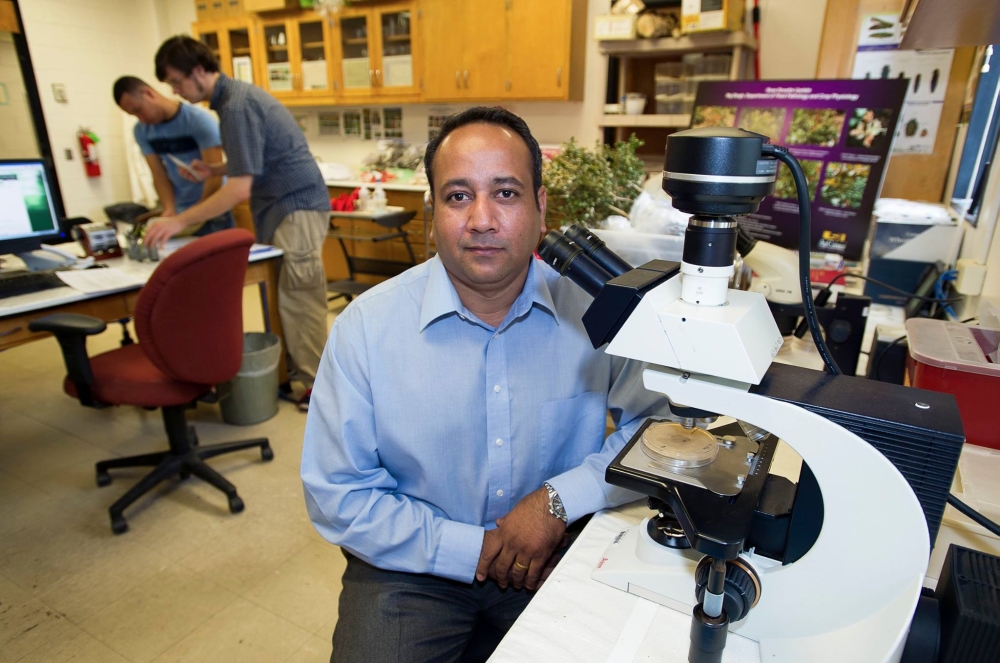
For almost a century, the Department of Plant Pathology and Crop Physiology has worked
towards advancing knowledge about microorganisms and abiotic stresses that cause plant
diseases and their management in Louisiana's crops. Plant diseases and environmental
stress significantly limit crop production in the state, with new diseases emerging
from changes in crop varieties, cultural practices, and genetic shifts in pathogen
populations. The department's faculty focuses on improving management strategies for
plant pathogens like fungi, bacteria, viruses, and nematodes, as well as environmental
stressors such as temperature extremes, excess moisture, and mineral toxicities.
Through research, extension, and teaching programs, the department aims to improve
disease management in Louisiana's commodities, including corn, cotton, fruit crops,
grain crops, ornamentals, rice, soybean, sugarcane, sweet potato, turfgrass, vegetable
crops, and coastal plants.
Read more about the Department of Plant Pathology and Crop Physiology.