|
History and Research
Achievements in Plant Pathology and Crop Physiology
Department Chronology
The
Department of Botany, Bacteriology and Plant Pathology was
created in 1924 by combining faculty from the College of
Arts and Sciences and the Louisiana Agricultural Experiment
Station. Claude W. Edgerton was named the first head, and
the department grew from three to 13 faculty members by
1930. In 1950, St. John P. Chilton became the head, and with
increased research and teaching responsibilities, the
department grew to a faculty of 28. The department was
divided in 1962 to form a new Microbiology Department and
the Department of Botany and Plant Pathology. In 1970, the
Department of Botany was formed and placed in the College of
Arts and Sciences, while the Department of Plant Pathology
was placed in the newly formed Louisiana State University
Agricultural Center (LSU AgCenter) with research
administered by the director of the Experiment Station and
teaching administered by the dean of the College of
Agriculture. After Dr. Chilton retired, Weston J. Martin
became head (1977-1982), and the name of the department was
changed to its current name of Plant Pathology and Crop
Physiology to more accurately reflect the disciplines of the
faculty residing within the department. In 2002, the weed
science program was moved to the Department of Agronomy
while the extension plant pathology faculty and programs
were merged into the Department of Plant Pathology and Crop
Physiology. Other department heads that have served are the
following: David R. MacKenzie (1983-1989), John B. Baker
(1989-1992), Johnnie P. Snow (1992-2002), Gerard T. Berggren
(2002-2008) and Lawrence E. Datnoff (2008-present). From the
1980s to present, the number of faculty positions has ranged
from 16 to 25, and currently = 15.
Graduate Students
From 1924
to 2011, more than 640 M.S. and Ph.D. degrees were granted,
and many former graduate students were placed in important
academic and industry positions. These positions have
included post-doctorates, assistant, associate and full
professors with universities (Auburn University, Rice
University, Southern Illinois University, University of
California-Davis, University of Alabama, University of
Florida, University of Georgia, University of Kentucky, Iowa
State University, Harvard Medical School, Mississippi State
University, North Carolina State University, Oregon State
University and others), research scientists with government
agencies (USDA-ARS, Florida Division of Plant Industries,
Louisiana Department of Agriculture and Forestry, Virginia
Department of Agriculture and others) as well as private
industry (Bayer, Dupont, Horticultural Research
International, Monsanto, PetoSeed Co., Syngenta and
others). In Louisiana, graduates hold positions with
agricultural chemical industries, crop consulting companies,
and as faculty and staff members with the LSU AgCenter.
Mission
Since
1924, the overarching mission of the Department of Plant
Pathology and Crop Physiology has been to advance and
disseminate knowledge about the microorganisms and abiotic
stresses that cause plant diseases and their management in
agronomic and horticultural crops, as well as coastal
plants, grown in Louisiana. Plant diseases and environmental
stress seriously limit crop production in Louisiana. New
diseases continue to appear because of changes in varieties
and cultural practices and genetic shifts in existing
populations of pathogens. In addition, new diseases are
introduced into Louisiana from other states and countries.
Faculty have led efforts to improve the management of
diseases caused by plant pathogens (fungi, bacteria, viruses
and nematodes) and environmental stress (temperature
extremes, excess moisture, mineral toxicities) through
programs of research, extension and teaching related to
Louisiana commodities that include corn, cotton, fruit
crops, grain crops, ornamentals, rice, soybean, sugarcane,
sweet potato, turfgrass, vegetable crops and coastal plants.
Faculty Achievements
A
chronological history of research achievements by faculty
are impressive and include the following:
Claude W.
Edgerton (1908-1955) systematically catalogued diseases of
crops in Louisiana including sugarcane, tomatoes, cotton,
other vegetable crops and fruits. His research on
Glomerella (+ and – strains) pioneered work on fungal
genetics. His book, Sugarcane and Its Diseases,
published by LSU Press in 1955, was the first comprehensive
treatise on this subject. Antonios G. Plakidas (1927-1960)
discovered that the widespread degeneration disease of
strawberries was viral in nature. In 1943, he published a
bulletin entitled Diseases of Some Vegetable and Fruit
Crops and their Control. Thirty thousand copies were
distributed in Louisiana, across the United States and in
many foreign countries. Dr. Plakidas also authored the 1964
LSU Press book, Strawberry Diseases.
In the
1940s, Irvin L. Forbes conducted extensive research on
sugarcane diseases, screening many varieties for disease
resistance in coordination with the sugarcane breeding
program. Many of his findings were published in LAES
bulletins. Charles F. Moreland developed methods of
photoperiod control to induce flowering of sugarcane under
Louisiana conditions during the 1950’s, and this discovery
was instrumental in the development of the sugarcane
breeding program. Louis Anzalone and Elias D. Paliatsias
(1960s/1970s) conducted the sugarcane breeding program for
many years in which seed and seedlings were produced and
then seedlings screened for resistance to Sugarcane
mosaic virus.
In the
late 1940s and early 1950s, Weston J. Martin advanced the
understanding of sweet potato diseases. He was the first to
demonstrate that soil rot of sweet potato was caused by
Streptomyces ipomoeae. He further found that circular
spot was caused by Sclerotium rolfsii and helped
determine the etiology of bacterial root and stem rot,
caused by Erwinia chrysanthemi. Norman L. Horn
initiated fungicide testing on soybeans in the early 1970s.
This research led to the general use of fungicides on
soybeans in Louisiana, which was responsible for large
increases in soybean yields.
Harry E.
Wheeler (1950s/1960s) authored numerous papers in the areas
of fungal genetics and physiology of parasitism. He was
known for his research on sexuality in Glomerella and
on the causal role of the pathotoxin victorin. George D.
Lindberg in the 1960s provided the first evidence of a
transmissible agent (virus) in the fungi. Dr.
Lindberg also discovered a bacterium that produced the
antifungal antibiotic tropalone. Wray Birchfield in the
1960s developed management strategies, such as nematicides
and host resistance, against the reniform nematode on
cotton. John P. Hollis in the 1960s/1970s showed the
importance of hidden problems in rice being caused by
nematodes (Hirschmanniella and Criconemella).
In 1961, James B. Sinclair developed sanitation methods to
avoid the transmission of Tobacco mosaic virus in
tomato and compared methods of delivering fungicides for
controlling “sore-shin,” caused by Rhizoctonia solani,
in cotton.
Gordon E.
Holcomb (1965-2006) discovered, identified and described
many new ornamental plant diseases, which included
centipedegrass mosaic (virus), coleus mosaic (virus), web
blight of rosemary, Guignardia leaf spot of camellia,
Amphobotrys blight of poinsettia and many others. He also
described the new fungus Alternaria (Nimbya)
alternantherae from alligatorweed and showed that it
also infected ornamental Amaranthaceae members. Dr. Holcomb
identified Sclerotinia blight as a serious disease in wild
populations of a native Trillium species and developed a
host list of 145 species for the pathogenic green alga,
Cephaleuros virescens, many of which were new to
the continental United States.
Kenneth
S. Derrick (1970-1987) developed the Serologically Specific
Electron Microscopy (SSEM) method, which was a major
breakthrough for identifying and screening for viruses.
Lowell L. Black (1968-1996) demonstrated the use of
reflective plastic mulch for reducing insect and virus
problems in vegetable production. In the late 1970s, Kenneth
E. Damann and his student showed the newly discovered
bacterial cause of ratoon stunting disease produced
pectinaceous xylem plugging gels in sugarcane that supported
microcolony development of the bacterium.
Milton
“Chuck” Rush (1970-2009) initiated a comprehensive fungicide
testing program for rice that led to the registration of
Benlate 50WP, demonstrating the potential of fungicides for
economically controlling fungal rice diseases. He identified
and reported new rice diseases in Louisiana and the United
States including the causal agents of rice panicle blight,
Burkholderia glumae and B. gladioli.
In 1974,
H. Kenneth Whitam started the first Plant Disease Diagnostic
Clinic in Louisiana and served as its first diagnostician.
Clayton A. Hollier (1982-present) identified new diseases in
ornamentals; determined yield losses of important diseases
in rice, sugarcane and wheat; and found hybrids with good
levels of tolerance to southern corn rust. In addition, he
educated county agents and farmers in how to recognize plant
diseases and the importance of integrated pest management in
reducing environmental harm. In 2005, he initiated the first
soybean sentinel plots to determine the presence and spread
of soybean rust in Louisiana and surrounding states.
Christopher A. Clark (1977-present) helped to develop 11
disease-resistant sweet potato varieties. He elucidated the
etiology of sweetpotato chlorotic leaf distortion, caused by
Fusarium denticulatum, an unusual epiphytic pathogen.
He also demonstrated that viruses reduce sweet potato yields
by 25 to 40 percent and developed a program for providing
virus-tested tissue culture plants to the LSU AgCenter
foundation seed program, providing farmers with an option
for healthy “seed”.
Since
1978, the Nematode Advisory Service, under the supervision
of Charles Overstreet, has processed more than 40,000
nematode samples saving producers millions of dollars in
production costs because of better nematode management
strategies. Since 2004, Dr. Overstreet has demonstrated the
effectiveness of
site-specific application of nematicides to manage nematodes
in cotton.
In 1984,
Marc A. Cohn’s group reported the first evidence for
gaseous nitrogen oxides as seed dormancy-breaking agents; in
studies from 1983-1992, the Cohn lab established the first
quantitative structure-activity relationships (QSAR) for
seed dormancy-breaking chemicals and showed that cell
acidification was a common response, indicating that
dormancy was regulated by cell pH.
Raymond
W. Schneider’s group (1984-present) was instrumental in
developing the use of nitrate utilization mutants
for testing vegetative compatibility between strains of
fungi and for assessing genetic diversity within and
among populations of plant pathogenic fungi. This test has
been used worldwide to establish the clonal nature of
Fusarium spp., and it provided conclusive evidence that
the Cercospora leaf blight pathogen of soybean is undergoing
genetic recombination. In 2004, the first discovery of
soybean rust in Louisiana and the United States was made by
Dr. Schneider. He, along with P. Boyd Padgett, was
instrumental in developing commercial fungicide protocols
for managing this disease in Louisiana and many other
states.
In
1989-1993, Dr. Black and Rodrigo Valverde (1988-present)
conducted field research on the epidemiology of tomato
spotted wilt virus on tomato and pepper and found new
overwintering hosts and vectors for this virus. In
1990s-2000s, Dr. Valverde discovered techniques for studying
dsRNA plant viruses, and these methods are being used
worldwide for the diagnosis and characterization of these
viruses.
In the
1990s, Mary M. Musgrave’s space biology program had plants
complete their life cycle (seed to seed) in microgravity on
several space shuttle missions and on the Russian Mir Space
Station. Norimoto Murai and his group (1990-1993) conducted
the first genetically modified rice field trial in the world
at the Rice Research Station with USDA approval. They
demonstrated that agronomic traits of GM rice were identical
to non-GM rice. From 1995 to 1997, Murai and his group
produced transgenic rice plants with bean/pea storage
proteins thus improving the rice seed nutritional quality.
Jeffrey W. Hoy and his group
(1983-present) were instrumental in reducing the incidence
of ratoon stunting disease, the long-time most important
disease of sugarcane, from 51 percent in 1997 to less than 1
percent. This was accomplished through a public and private
sector partnership to produce healthy planting material for
farmers and the establishment of the Sugarcane Disease
Detection Lab to provide disease monitoring. Hoy’s
group also assessed the threat posed by incursions into
Louisiana during the past 30 years by major sugarcane
diseases, including smut, leaf scald and yellow leaf. They
developed appropriate management practices to prevent severe
yield losses.
Kenneth
E. Damann and a student showed that a 2007 population of
Aspergillus flavus revealed specificity in the soil
population with some VCG’s appearing only in soil and others
capable of infecting corn kernels. Also, the kernel
infecting isolates were predominantly two VCG’s, one that
produced very low aflatoxin and the other produced high
aflatoxin, suggesting that the low toxin producing strains
were acting as a natural biocontrol agent to limit aflatoxin
contamination of corn.
In
2010-2011, Edward C. McGawley and Charles Overstreet were
the first to document reproductive and pathogenic variation
in geographic isolates of reniform nematode on cotton and
soybean in the United States. Zhi-yuan Chen
(2005-present) has identified several soybean lines to be
moderately field resistant to Cercospora leaf blight of
soybeans, as well as two African corn lines with excellent
aflatoxin resistance. Don M. Ferrin (2005-present) has
developed and presented educational materials statewide on
plant pathogens, diseases they cause and their management to
stakeholders in the horticultural industries. He has trained
extension field faculty in plant disease identification and
management, and he has developed educational materials for
commercial producers.
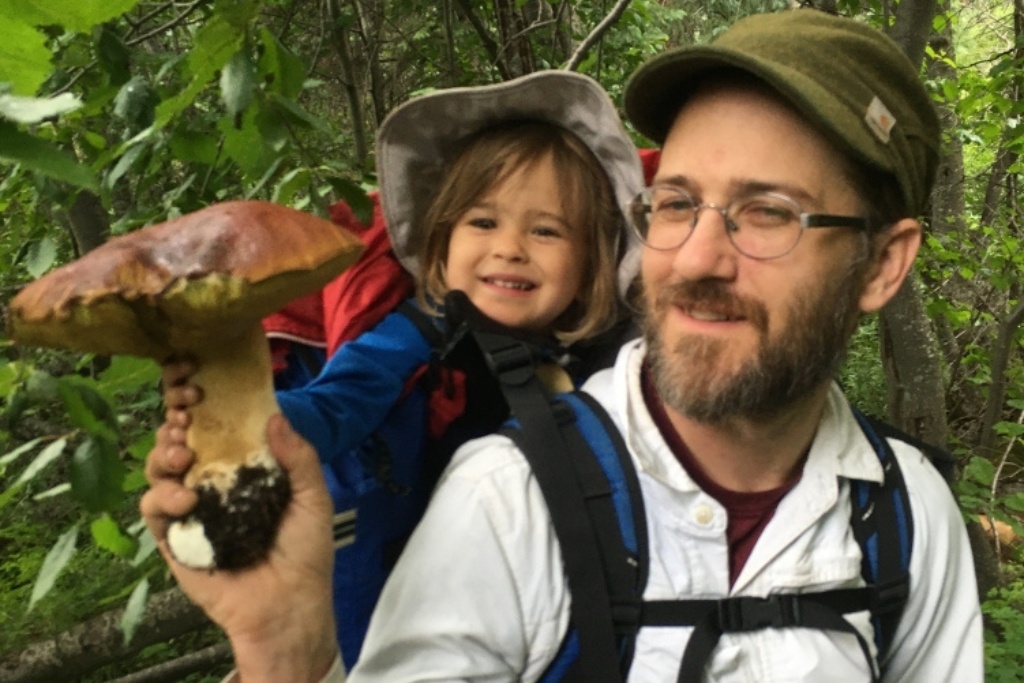
M.
Catherine Aime (2007-present) has discovered, described and
published one new class (Tritirachiomycetes), one new genus
(Guyanagaster) and 46 new species of fungi.
Raghuwinder “Nick” Singh (2007-present) diagnoses thousands
of plant samples yearly submitted by residents of Louisiana
including homeowners and commercial clients since 2010, when
the Plant Diagnostic Center was established. Jong Ham’s
(2007-present) laboratory group has discovered several new
genetic elements of Burkholderia glumae, the causal
agent of panicle blight of rice important for bacterial
virulence. This achievement has provided new insights on
disease etiology and new approaches for disease control.
The
Future
This is
only a brief summary of faculty accomplishments in the
Department of Plant Pathology and Crop Physiology. Clearly,
the programs in this department have fulfilled and continue
to fulfill the institutional role, scope and mission of the
LSU AgCenter by generating basic knowledge and applied
solutions to plant diseases and abiotic problems of
agricultural industries that are critically important to the
economy of Louisiana while educating future scientists
through our M. S. and Ph. D. programs. The
disease-conducive environment in Louisiana and the latest
incursions of new pathogens and pathogen-vectors into the
state make it clear that plant diseases are, and will
continue to be, one of the primary limiting factors in crop
production (e.g., Asian soybean rust, citrus greening,
bacterial blight of rice), in the home and urban landscapes
(daylily rust), and in the environment (sudden oak death).
Each time a new pathogen arrives and a new disease outbreak
occurs in Louisiana, it is the Department of Plant Pathology
& Crop Physiology that has provided the leadership for
generating basic knowledge and applied solutions for
managing these diseases, as well as environmental stresses.
[previous page]
|